

Invited Speakers
Keynote Speakers
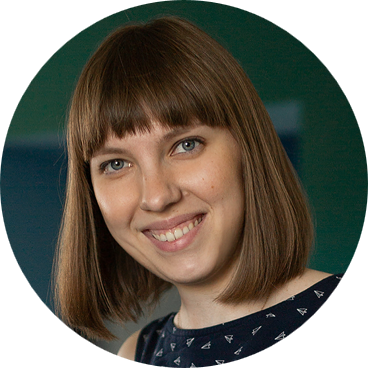
Elena Kirshanova
Technology Innovation Institute (TII), UAE
Elena Kirshanova is a lead cryptogtapher in Technology Innovation Institute. She received her PhD from Ruhr University Bochum advised by Prof. Dr. Alexander May. Then she was a PostDoc at ENS Lyon in AriC team supervised by Prof. Dr. Damien Stehlé. Her work encompasses classical and quantum algorithms for lattice- and code-based problem, as well as efficient implementations of lattice-based attacks.
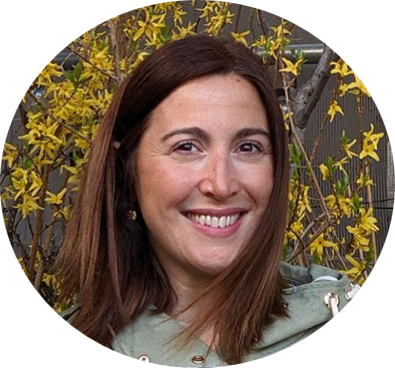
María Naya-Plasencia
INRIA Paris, France
Maria Naya-Plasencia is a research director at Inria, France, working mainly on symmetric cryptography. She obtained a starting ERC grant in 2016 and a consolidator in 2024, and received the Young Researcher Prize from Inria-Académie des Sciences in 2019. She has given several invited keynote talks, like Eurocrypt 2022 and FSE 2019, and is an elected director of the IACR Board.

Peter Schwabe
Max Planck Institute for Security and Privacy, Germany & Radboud University, Netherlands
Peter Schwabe is scientific director at MPI-SP, Professor at Radboud University and Adjunct Professor at Ruhr University Bochum. He graduated from RWTH Aachen University in computer science in 2006 and received a Ph.D. from the Faculty of Mathematics and Computer Science of Eindhoven University of Technology in 2011. He then worked as a postdoctoral researcher at the Institute for Information Science and the Research Center for Information Technology Innovation of Academia Sinica, Taiwan, and at National Taiwan University.
His research area is cryptographic engineering; in particular the security and performance of cryptographic software. He published more than 80 articles in journals and at international conferences presenting, for example, fast software for a variety of cryptographic primitives including AES, hash functions, elliptic-curve cryptography, and cryptographic pairings. He has also published articles on fast cryptanalysis, in particular attacks on the discrete-logarithm problem. In recent years he has focused in particular on post-quantum cryptography. He co-authored the “NewHope” and “NTRU-HRSS” lattice-based key-encapsulation schemes which were used in post-quantum TLS experiments by Google and he was co-submitter of seven proposals to the NIST post-quantum crypto project, all of which made it to the second round, five of which made it to the third round, and three of which were selected after round 3 for standardization.
In 2021, he co-founded the Formosa-Crypto project, an effort by multiple research groups to build (post-quantum) cryptographic software with formal proofs of functional correctness and security. He is also involved in the Pavona open-source silicon ecosystem, where he is particularly working on hardware-software codesign for post-quantum cryptography.